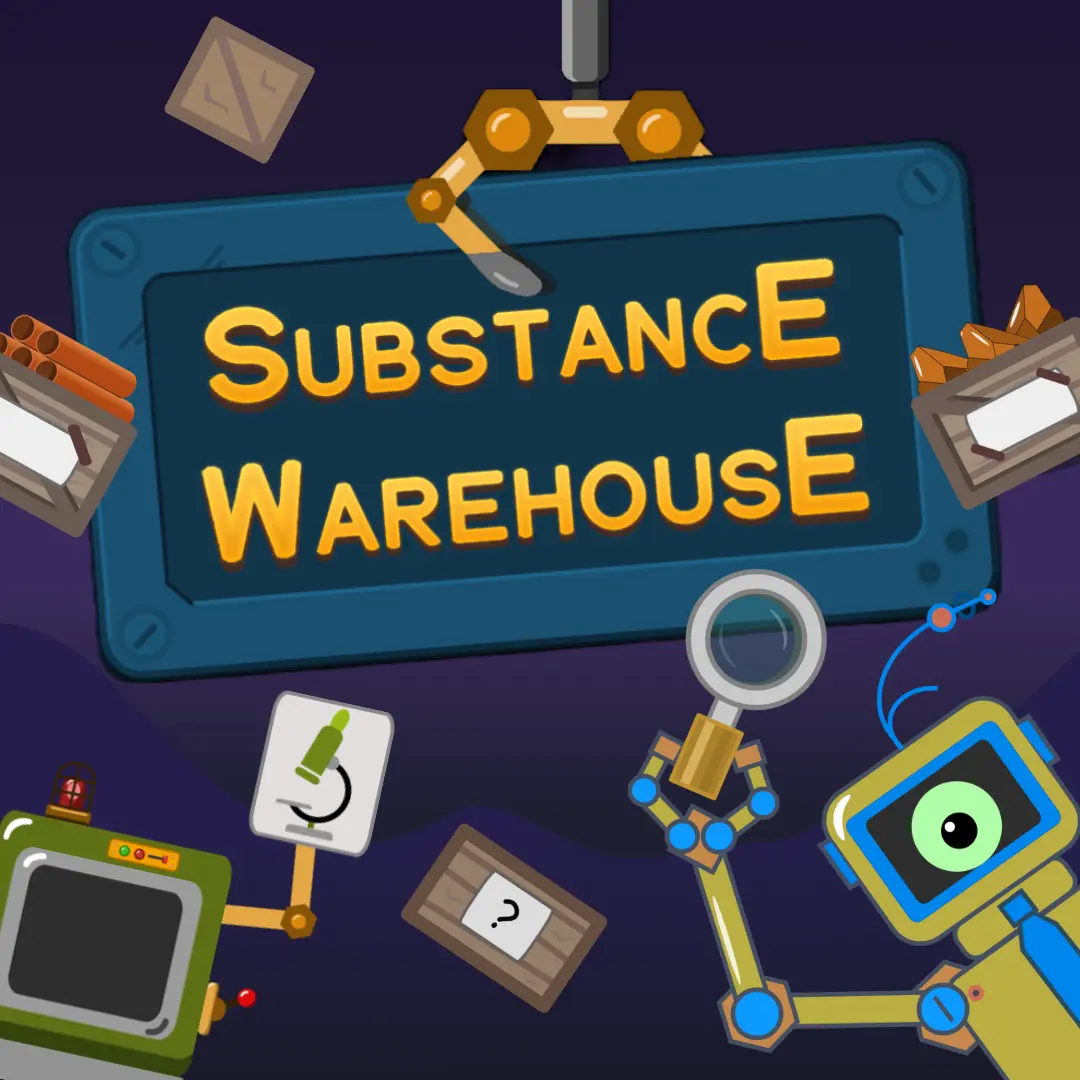
Substance Warehouse is an educational game developed in collaboration with Legends of Learning (a platform working for the US system of education).
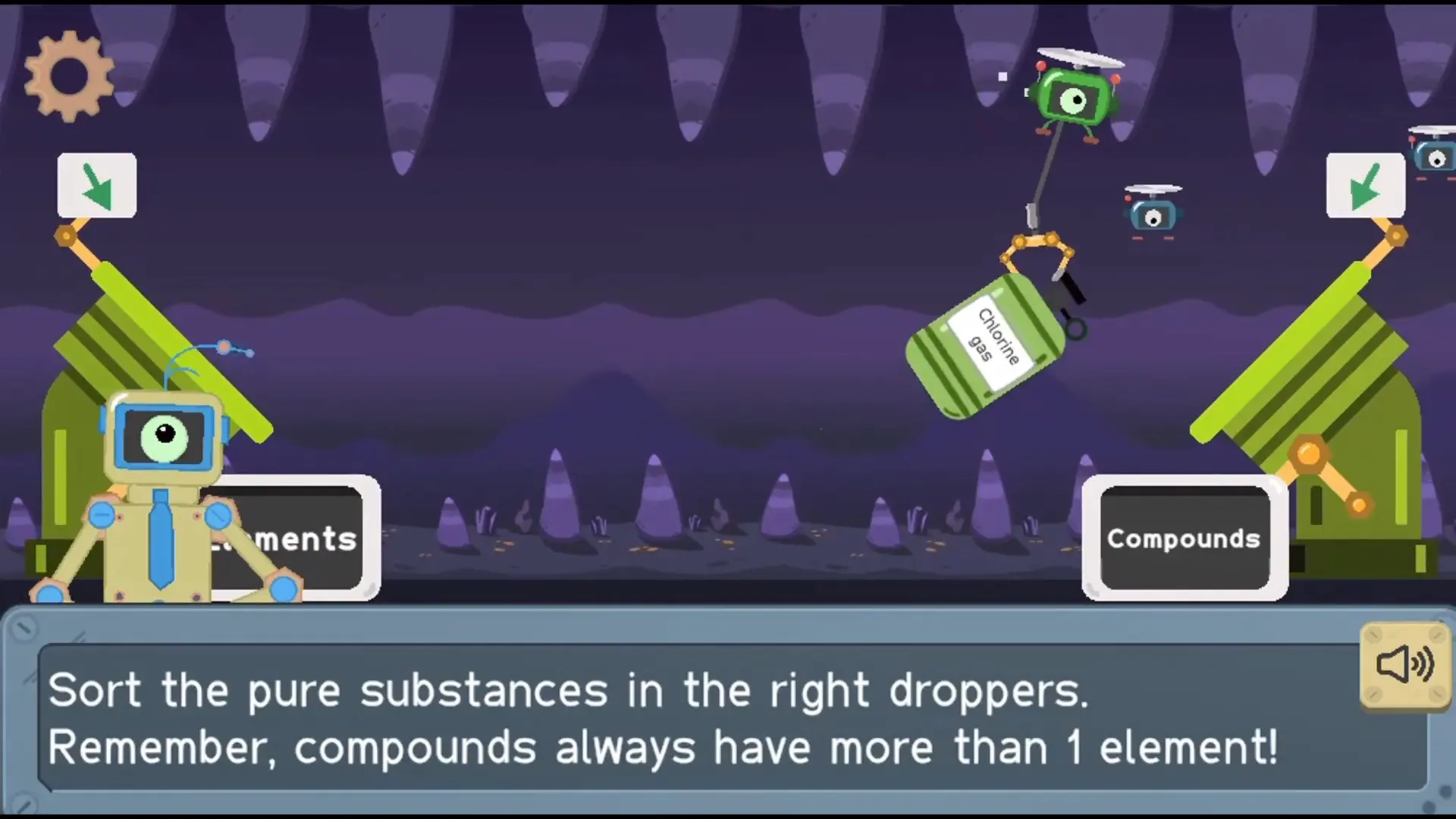
The game works as a quiz game, students impersonate a crane operator who’s job is sort packages of chemical substances using the knowledge gained.
This project was developed in collaboration with a game artist who created the 2D assets, while the game design was shaped through a shared effort.
We worked closely with the Legends of Learning team to meet deadlines and ensure all requirements were fulfilled.
Substance Warehouse was, as before mentioned, in his core a quiz game. It was designed in levels of increasing difficulty, each one corresponding to a question or a topic in the pure substances study field.
The player after a brief explanation needed to sort using a crane all the packages in the right places. In some cases machines to alter the state of the package were present.
An example was to teach the kids the difference between states of matter, in that case the player needed to sort all the packages between solids and gasses with the option to melt ice in to water to give the right answer.
In some levels we also introduced extra packages to increase the difficulty in the crane operation itself. It is after all also a game not just a quiz.
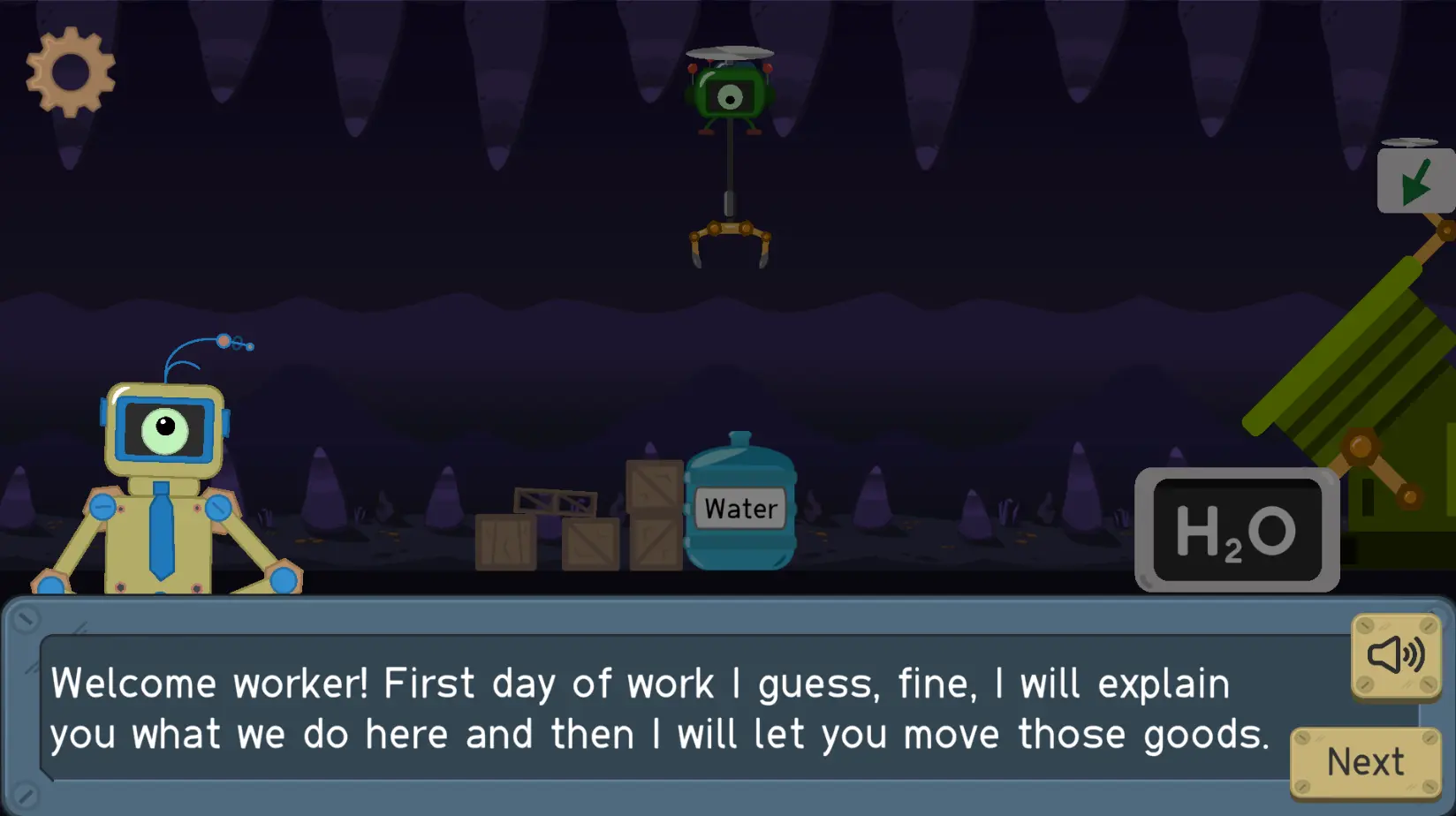
Substance Warehouse is a 2D physics-based experience that uses a rope-like simulation to move packages with realistic behavior. The rope physics were custom written to be fine tuned for our needs but for the overall physics simulation we relied on what was provided in the Unity engine.
It was also necessary an implementation of the Legends of Learning platform’s SDK to send and load player results in game.
The overall build was required to be less than 30MB download as a WebGL build.
The game since it was uploaded to a educational platform received two different ratings one from professors and one from kids.
The game was overall well received but unexpectedly was better rated by professors rather then kids. Professors placed greater importance on how effectively the game conveyed the study topic with an average review of 4 out of 5.
I believe the lower reception among kids was due to the less flashy art style we adopted. Had we chosen a 3D cartoony style, we might have received better reviews from them as well.
In any case from the kids the reviews were around 3 out of 5.
I am very proud of this project, it was my first collaboration with a big company, the project itself was of the right scope for my skills at the time and my team was able to deliver a good product meeting all deadlines!